Design Signal overview across desktop, tablet and mobile
Booking journey performance, funnel and supporting evidence
Research studies, participant findings and journey context
Insights with source evidence, confidence and validation plans
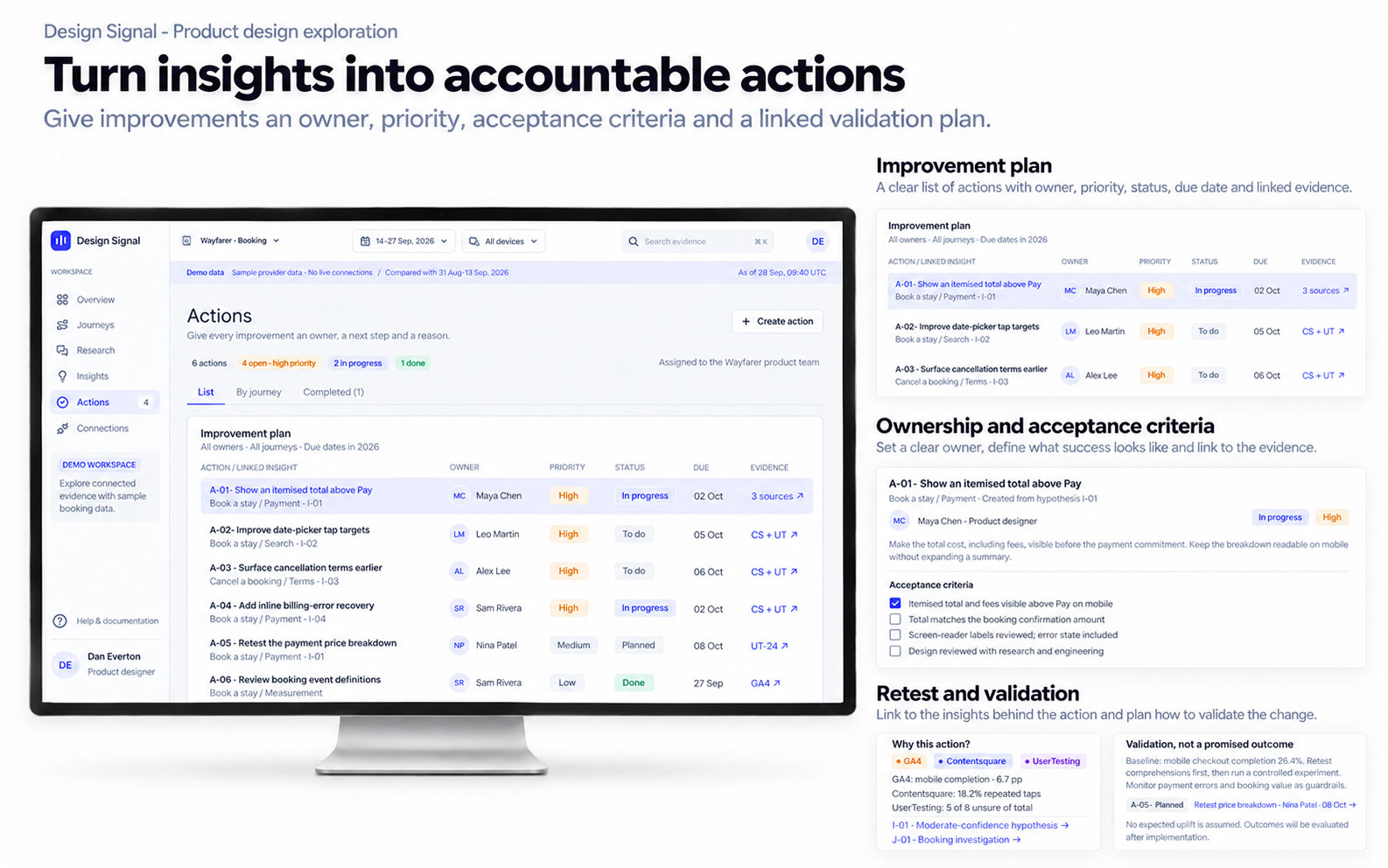
Improvement actions with owners, priorities and acceptance criteria

Connected insights dashboard

Design Signal is a self-initiated product concept that brings analytics, behavioural evidence and customer research into one journey-led workspace. It helps product teams move from noticing a performance change to understanding the evidence, developing a hypothesis and deciding what to investigate next.

The idea grew from my experience using GA4, Contentsquare and UserTesting. Each provides a useful perspective, but assembling an investigation means switching platforms, checking different reporting periods and manually connecting findings.

The problem

Useful evidence, fragmented across tools

A conversion report can show that performance has changed, while session evidence and usability findings offer possible explanations. Teams need a practical way to investigate these signals together and communicate the reasoning behind a decision.

Disconnected investigation

Metrics, replay references and research findings sit in separate systems. Linking them to the same journey, step and device adds work and makes investigations harder to revisit or share.

Different definitions and populations

Project sessions, checkout sessions, sampled replays and study participants describe different populations. A shared dashboard needs to retain those distinctions, along with reporting periods and source coverage, so comparisons remain understandable.

Findings without a next step

An issue can be documented without a clear owner, proposed change or validation plan. I wanted the product to connect evidence with an accountable action and keep that connection visible through review.

Design approach

Organising evidence around the journey

I structured Design Signal around the customer experience, rather than separate dashboards for each provider. A journey gives performance, behavioural evidence and research a shared context while preserving their individual meaning.

A focused performance overview

Combining sessions, booking conversion, booking revenue in pounds and high-priority issues. A conversion trend, device comparison, recent research and connection status provide routes into a more focused investigation.

Traceable insights

Each insight retains its evidence trail, source, sample information, confidence assessment and validation plan. Confidence is presented as a team judgement, rather than a calculated certainty score.

Research in context

Participant excerpts sit alongside the method, task, sample, review status and clip references, making it easier to understand what a finding supports and where its limits lie.

Design & delivery

From a signal to a testable action

The sample scenario starts with a decline in mobile checkout completion and explores whether an unclear price breakdown could be reducing confidence before payment.

Investigate the booking funnel

Bringing together a performance change, repeated price-summary taps and participant uncertainty, with the source and population attached to each signal.

Connect insights with actions

Linked evidence and a validation plan keep the reason for the change visible throughout delivery and review.

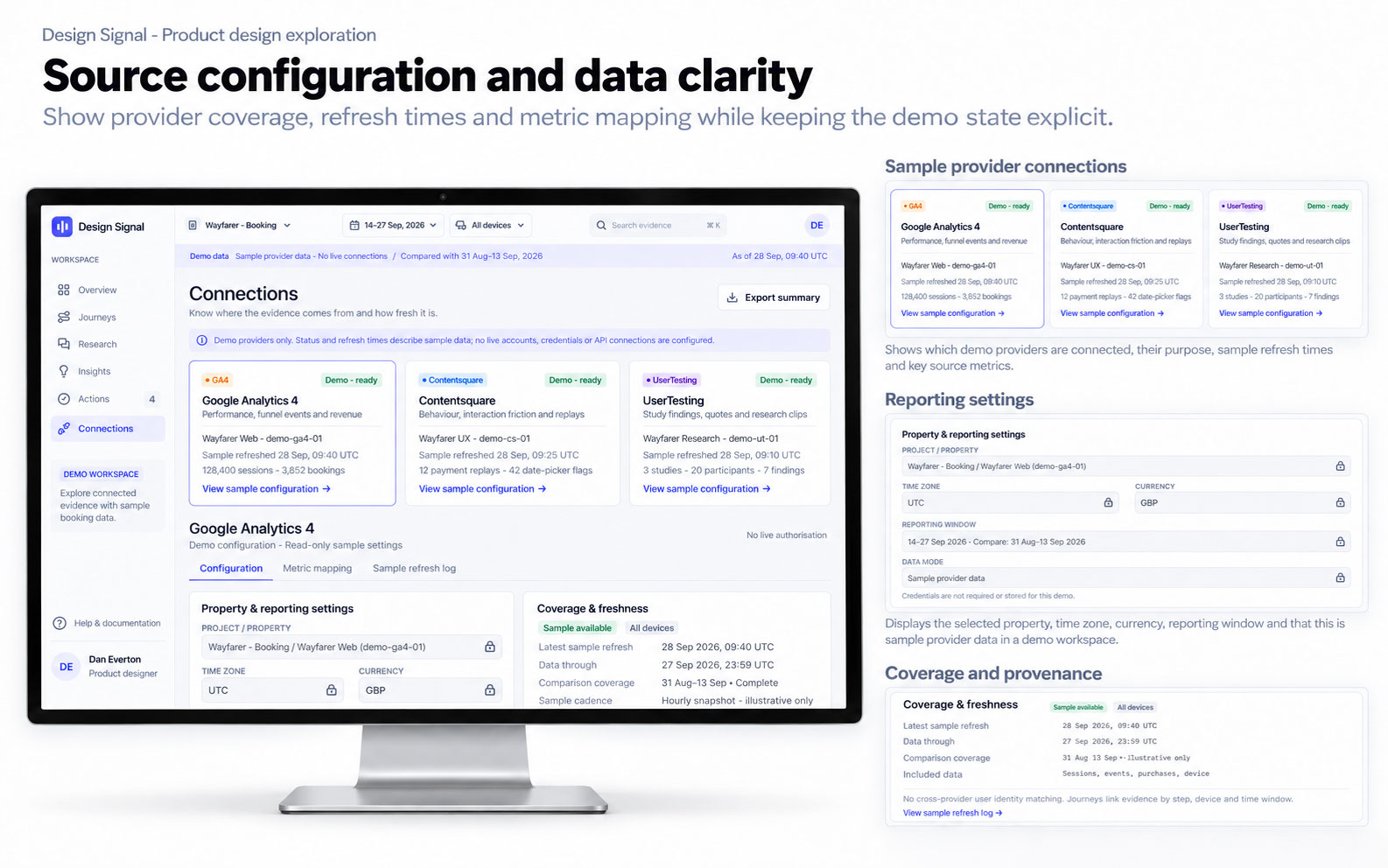
Make source configuration explicit

Showing sample provider configurations, refresh times, event mapping and reporting settings, including GBP. It identifies the demo state clearly and does not imply that live accounts or API connections have been configured.