Halfords location pages redesign

Location pages redesign

Halfords operates over 700 stores and autocentres across the UK - but their location pages were failing customers at the exact moment they were ready to visit or book. I led the end-to-end redesign of the location page template, serving millions of sessions per month and directly influencing footfall, in-store bookings and local SEO performance.

Working within a cross-functional squad alongside product managers, engineers, SEO specialists and the store operations team, I took the project from initial discovery research through to a shipped, iterated and measured solution.

The problem

Pages built for search engines, not people

The existing location pages had been built primarily with SEO in mind. While they ranked well, usability research told a very different story. Customers arriving with high intent - ready to visit, book a service or check stock - were struggling to find basic information such as opening hours, services available at that store and directions.

Heatmap analysis showed that many users were abandoning without engaging with a conversion action. Exit rates were disproportionately high compared with the rest of the site and click-to-call rates were below expectations for retail location pages. The pages were generating traffic they could not effectively convert.

Research

Understanding what customers actually needed

I used a mixed-methods research programme to build a clearer picture of customer intent and behaviour.

Analytics deep-dive

Analysed three months of GA4 and heatmap data, including scroll depth, click patterns and abandonment points, then cross-referenced findings with session recordings.

Moderated research

Ran 12 moderated usability sessions focused on store information, services and booking. Nine of the 12 participants failed to find the correct opening hours on their first attempt.

Benchmark audit

Reviewed location-page patterns across 12 comparable UK retailers and service businesses, including Kwik Fit, Nike and Currys.

Stakeholder interviews

Spoke with store managers and customer-service teams to identify the recurring questions and information gaps customers were bringing into stores.

Process

From insight to shipped template

Information architecture

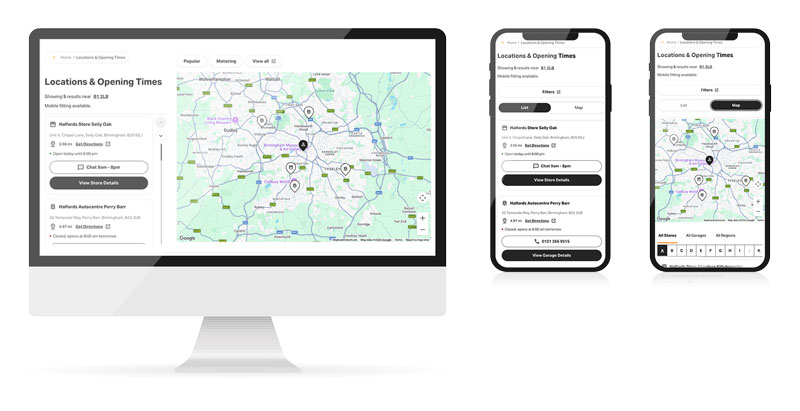
Restructured the hierarchy around three primary jobs: confirm location, confirm hours and confirm services. Everything else followed those priorities.

Template design in Figma

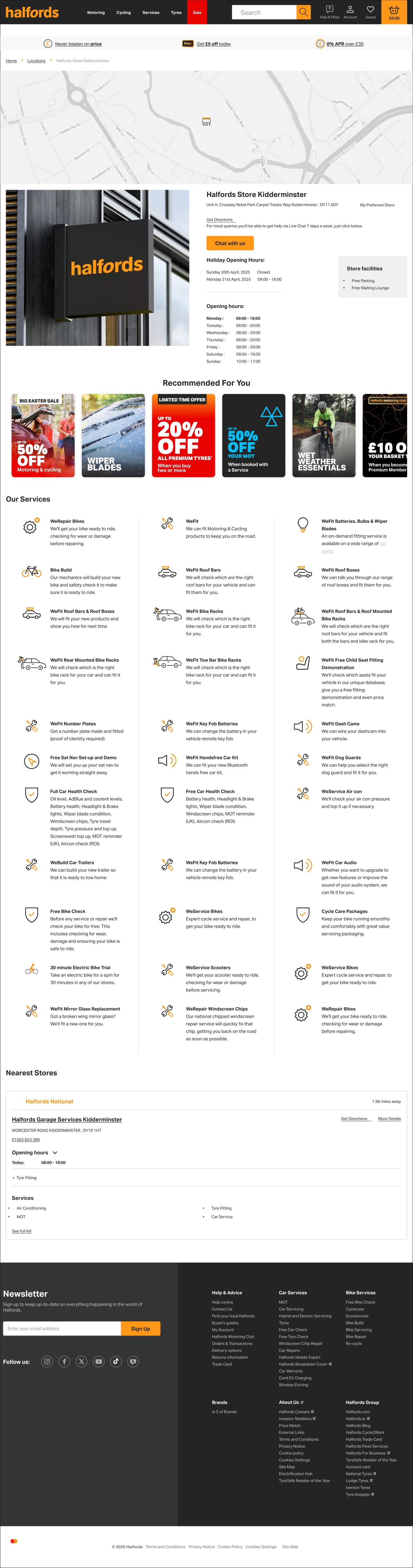
Designed a flexible template supporting 12 store variants across retail, autocentre and cycle services, using reusable components, auto-layout and content variants.

Prototype testing

Completed two rounds of unmoderated prototype testing with 25 participants per round, followed by moderated sessions. The hours display, services accordion and map interaction were iterated between rounds.

A/B test & rollout

Launched the new experience to 40% of live traffic and monitored conversion, engagement and SEO measures for six weeks before full rollout.

Outcomes

Measurable uplift across every key metric

-12% Contact centre call volume
+8% Online booking conversion
-18% Bounce rate from location pages
+27% Organic search traffic - local

The redesign also significantly improved accessibility compliance - the new template passed a WCAG 2.2 AA audit with zero critical issues, compared with 17 flagged on the original.